Bio-construction in Bahia: how the BioMétodo designs sustainable homes built to last
From the raised slab to the earth brick made without cement, the design and material choices behind every BioConstrutora build on the Cocoa Coast.
A home on the Cocoa Coast has to deal with rain, ground moisture and a sun that shifts position over the year. These conditions show up in very concrete decisions. How high does the floor sit? How far does the roof reach out? Where does the timber come from? What happens when an earth wall is hit by wind-driven rain?
We created the BioMétodo, BioConstrutora's way of building, to answer those questions. We bring together contemporary building techniques and materials such as compacted earth, wood and ceramics to make homes that blend into the landscape and can be cared for over many generations. The beauty we look for also comes from the way the house works. The eave that shades the porch protects the facade. The small brick that gives the wall its color is made from the region's own soil.
What is bio-construction, and how does it relate to the environment?
Bio-construction considers how a building relates to the climate, the land, natural resources and the people who will live in it. In practice, that means looking at where materials come from, how they are made, how far they travel to the site, what maintenance they need and how the house performs while it is lived in.
That view matters for the construction industry. The 2025–2026 global status report for buildings and construction, published by the United Nations Environment Programme and GlobalABC, attributes about 37% of global emissions and nearly half of the world's material extraction to the sector. At the scale of a single house, looking at the life cycle helps show where the impacts are, from extracting raw materials to replacements that may happen decades later.
The floating house: why raise the slab 45 centimeters?
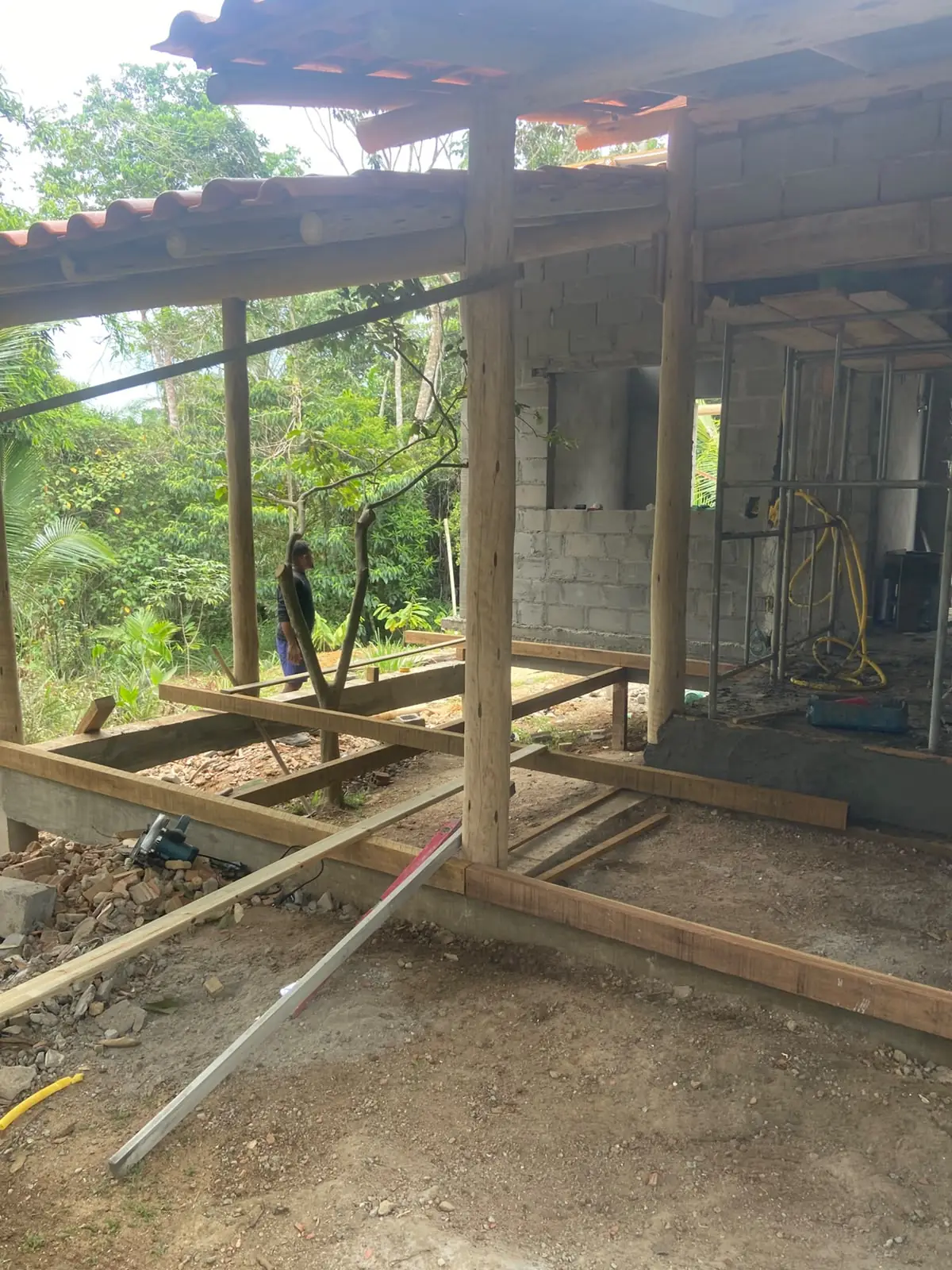
We call it the floating house: the BioMétodo solution in which the slab sits 45 centimeters above the ground. From the outside, the house seems to rest lightly on the land. In construction terms, raising the floor increases the separation between the living space and the soil, and keeps the base of the walls away from the zone most exposed to rain splash.
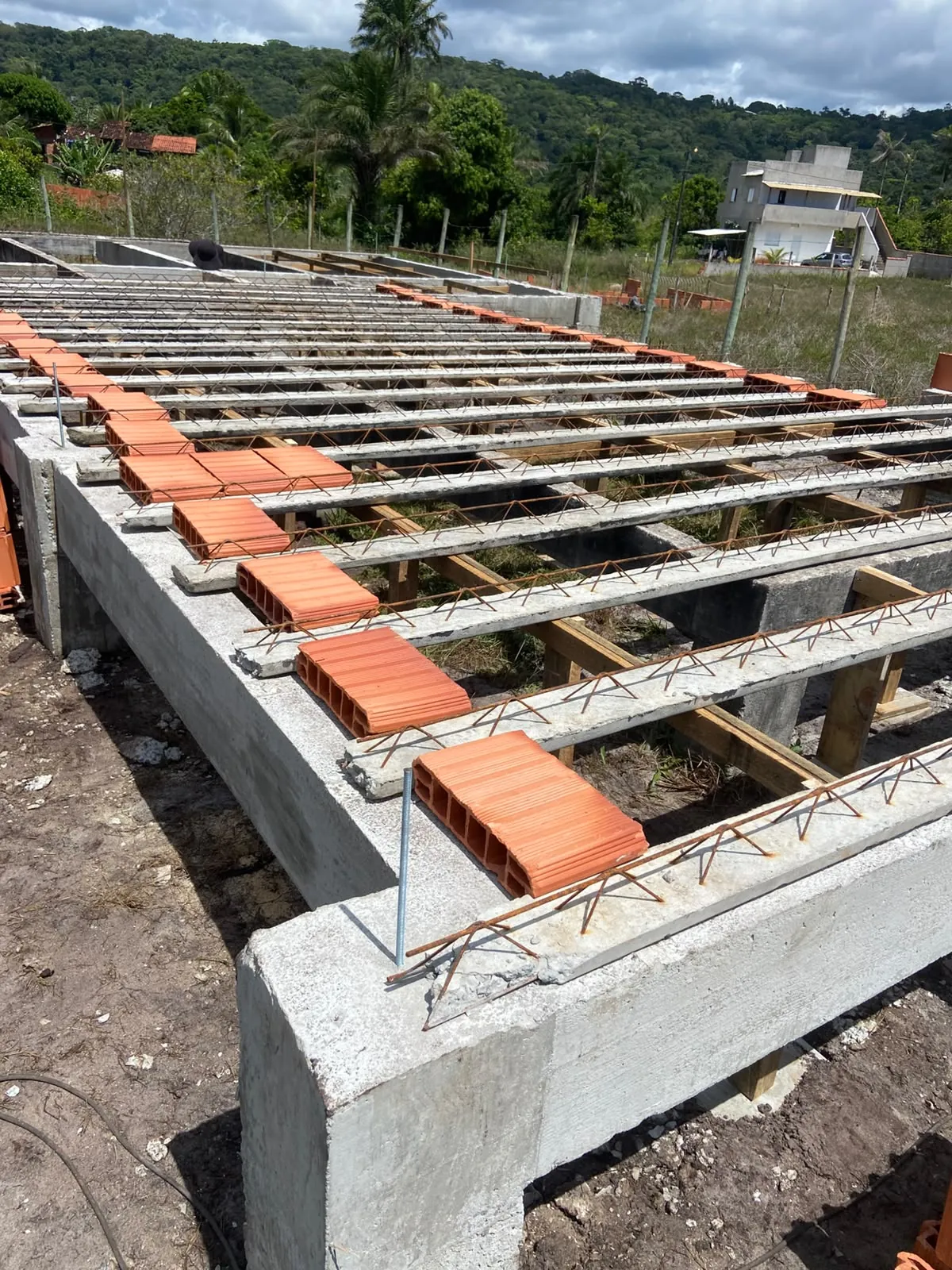
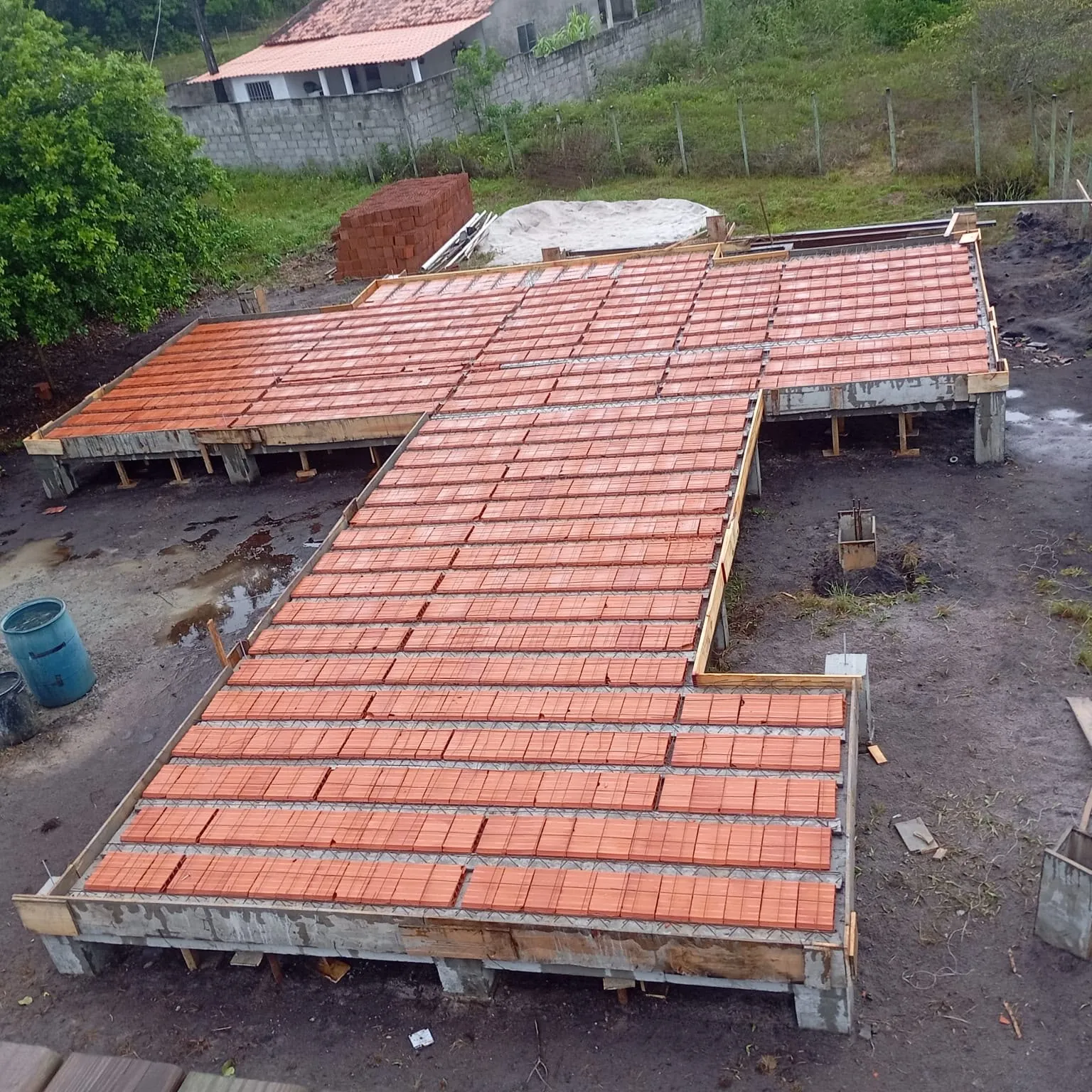
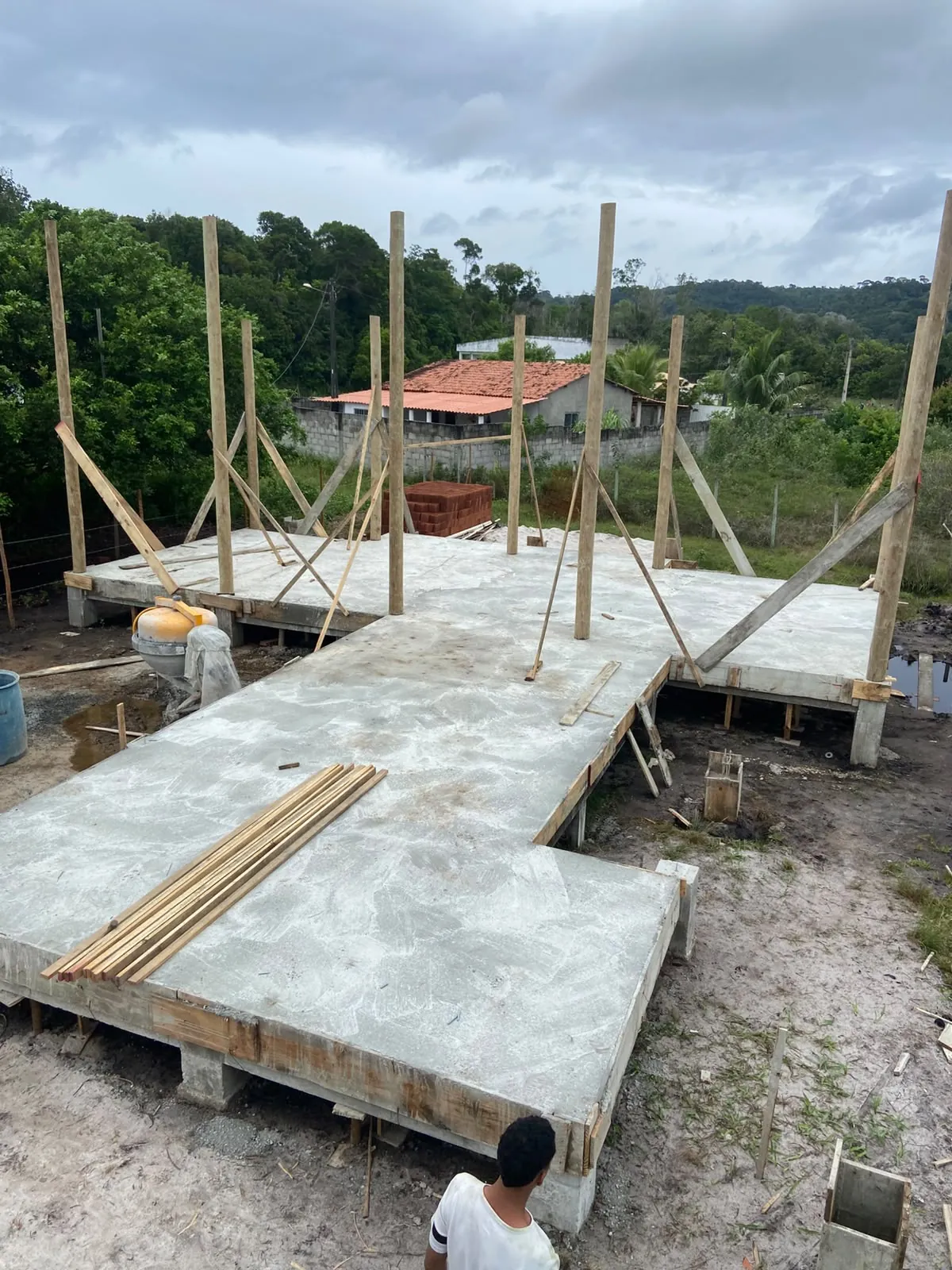
Water can also move by capillary action, as moisture travels through the pores of materials such as concrete and masonry. That is why the raised slab works together with site drainage, waterproofing and careful detailing where the foundation, floor and walls meet. The 45-centimeter height is part of the BioMétodo, and the foundation is defined by each plot's conditions and the structural design.
Earth bricks without cement: how does soil become a wall?
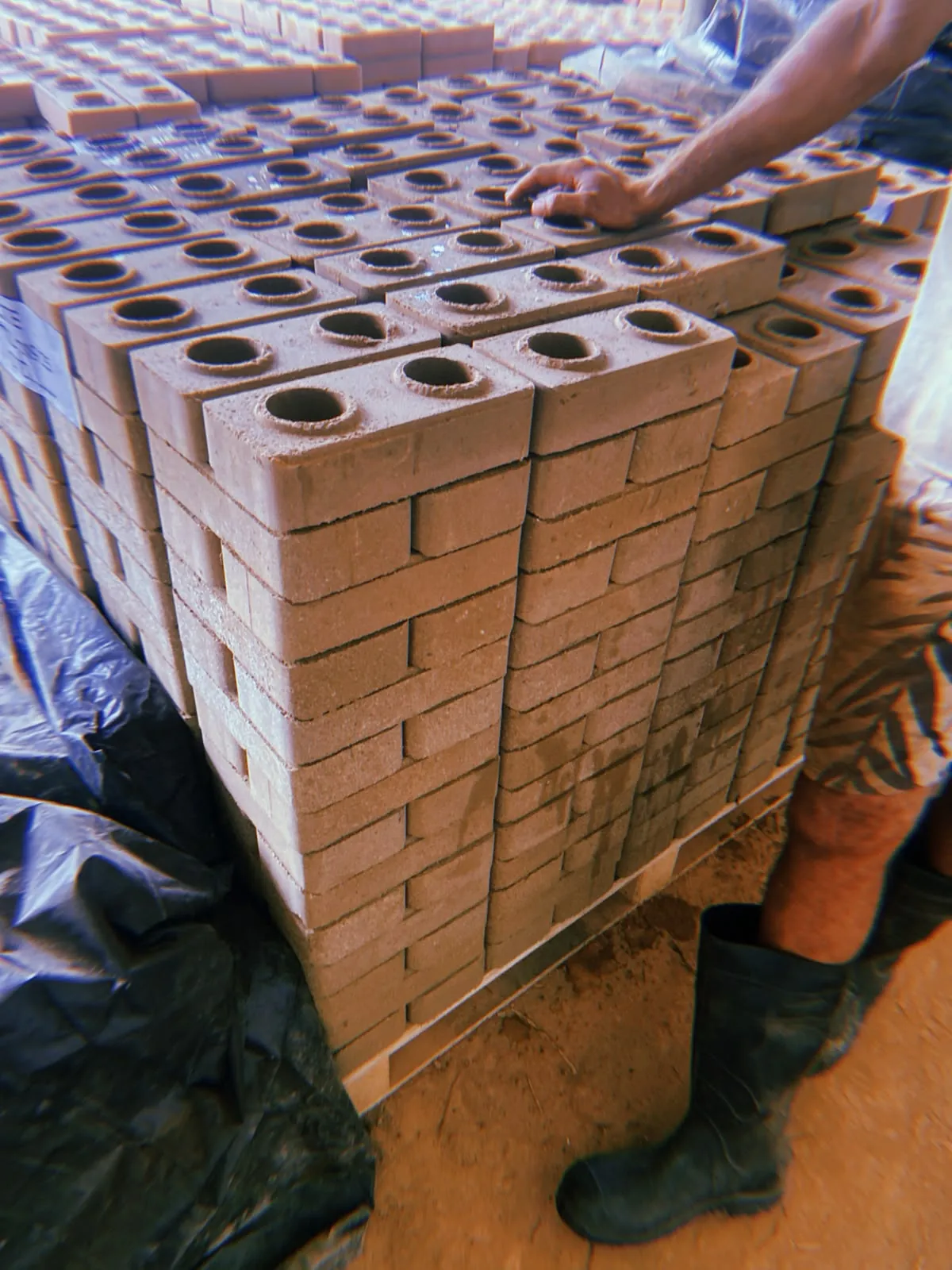
In BioConstrutora homes, the eco brick is made only of compacted soil from the Atlantic Forest region, with no added cement. The density and purity of the soil we select allow us to leave cement out of the brick. Compaction brings the particles closer together and reduces voids, giving the block its shape.
Technically, whether a soil is suitable for blocks also depends on its particle-size distribution, that is, the mix of sand, silt and clay particle sizes. The moisture at the time of pressing and the energy applied during compaction affect the block's density, strength and behavior in contact with water. Since these properties vary from one soil to another, compression tests and assessments of water absorption and erosion help determine which uses suit each material.
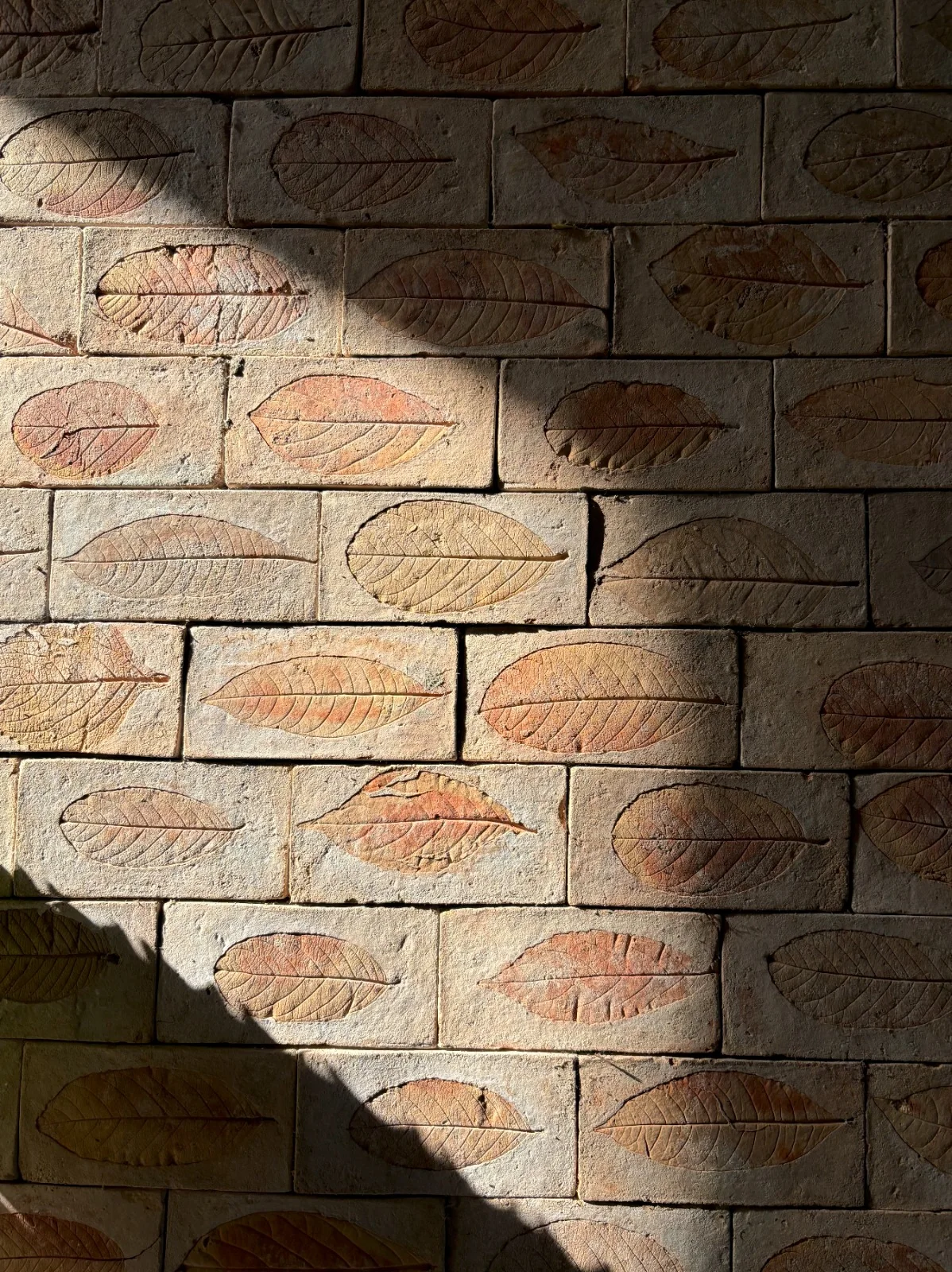
Local production supports people who work near the building site and shortens the bricks' journey to the build. When the bricks are left exposed, the color and texture of the earth already form the finish, reducing the need for extra layers of cladding. A scientific review of the life cycle of earth construction found transport distance and binder content, such as cement, among the factors with the most influence on the embodied energy and carbon of these systems. To quantify the environmental impact of a whole house, the foundation, roof, other materials and maintenance over time also have to be considered.
Eucalyptus, angelim and pine: where does each wood come from?
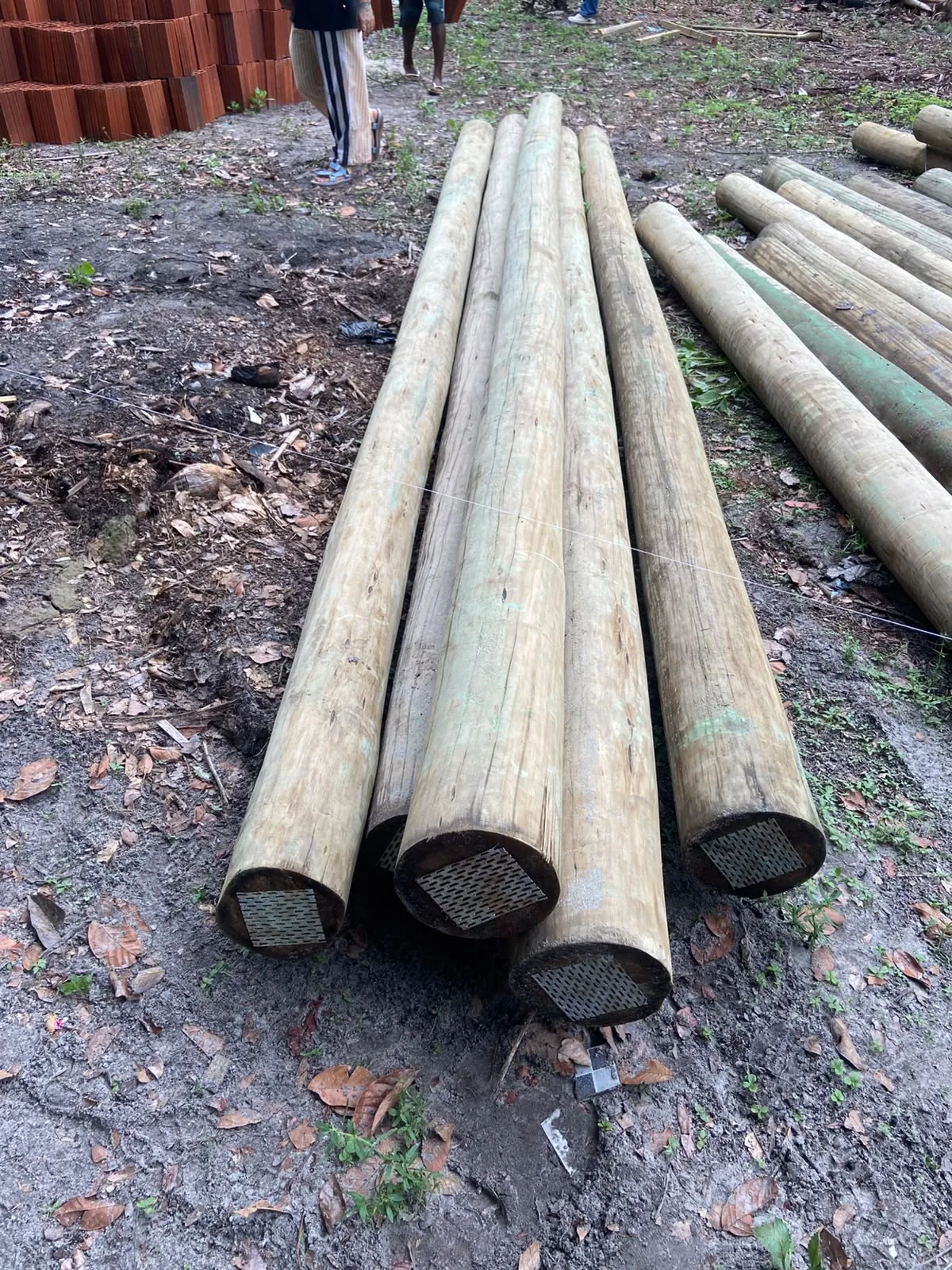
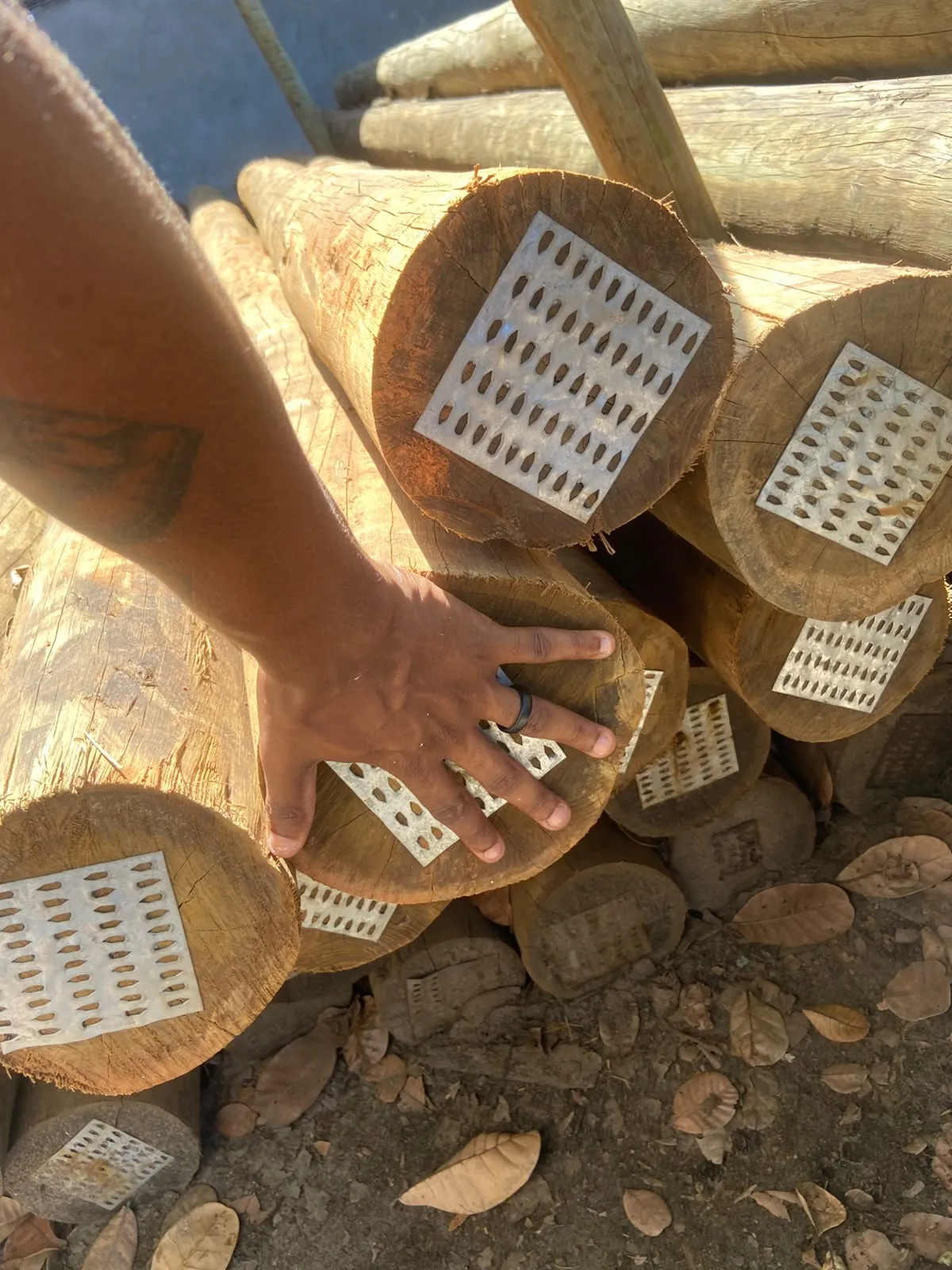
For the structure, we use treated eucalyptus from Minas Gerais, certified as plantation-grown. The round posts reveal the natural shape of the trunks. The timber's origin and its preservative treatment answer two different questions. The first identifies where the raw material comes from. The second helps protect the piece against organisms that degrade wood, such as fungi and insects, and must match the exposure conditions set out in the design.
Native angelim comes from trusted suppliers, with an invoice issued by the manufacturer. The invoice records the purchase. Forest traceability is shown by the environmental documentation that applies to the product. According to Ibama, Brazil's federal environmental agency, the DOF+ Rastreabilidade system makes it possible to trace the origin of controlled timber products along the supply chain.
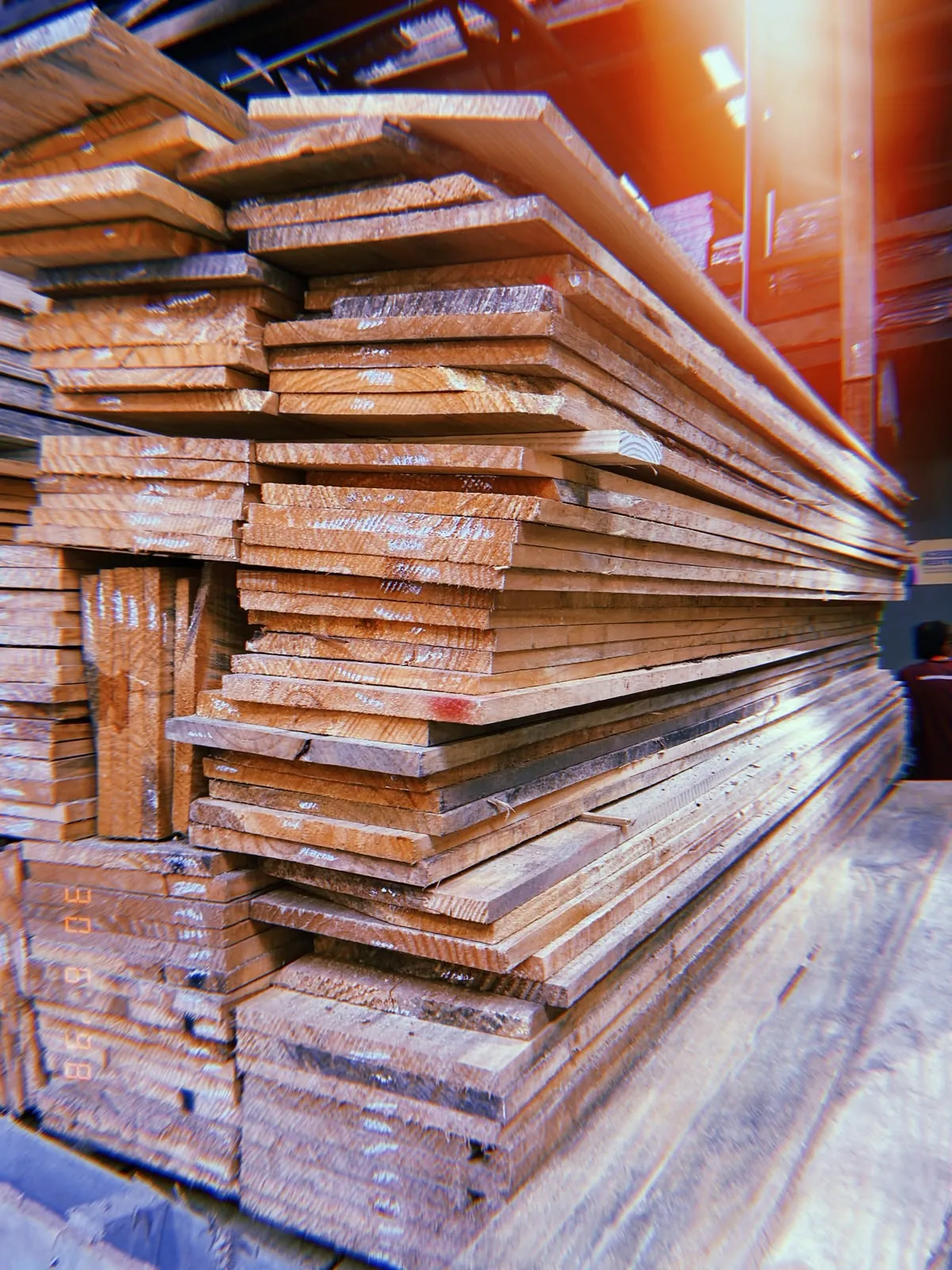
For ceilings and decks, we use plantation pine boards, cut with precision. Wood exchanges moisture with its surroundings and can swell or shrink as those conditions change. That is why joints, gaps between boards and the ability to dry out need special attention, especially on the deck, which is more exposed to rain and moisture than the ceiling.
Ceramic roof tiles, wide eaves and waterproofing
Ceramic tiles made in Bahia cover the house and extend over the facades as wide eaves. That overhang creates shade and helps reduce how much the walls get wet. The effect varies with the facade's orientation, the size of the eave and the wind direction. Beneath the tiles, the waterproofing layers specified in the design add to the protection of the roof and ceiling. At joints and other areas exposed to water, detailing helps lead rain away and keep moisture from being trapped.
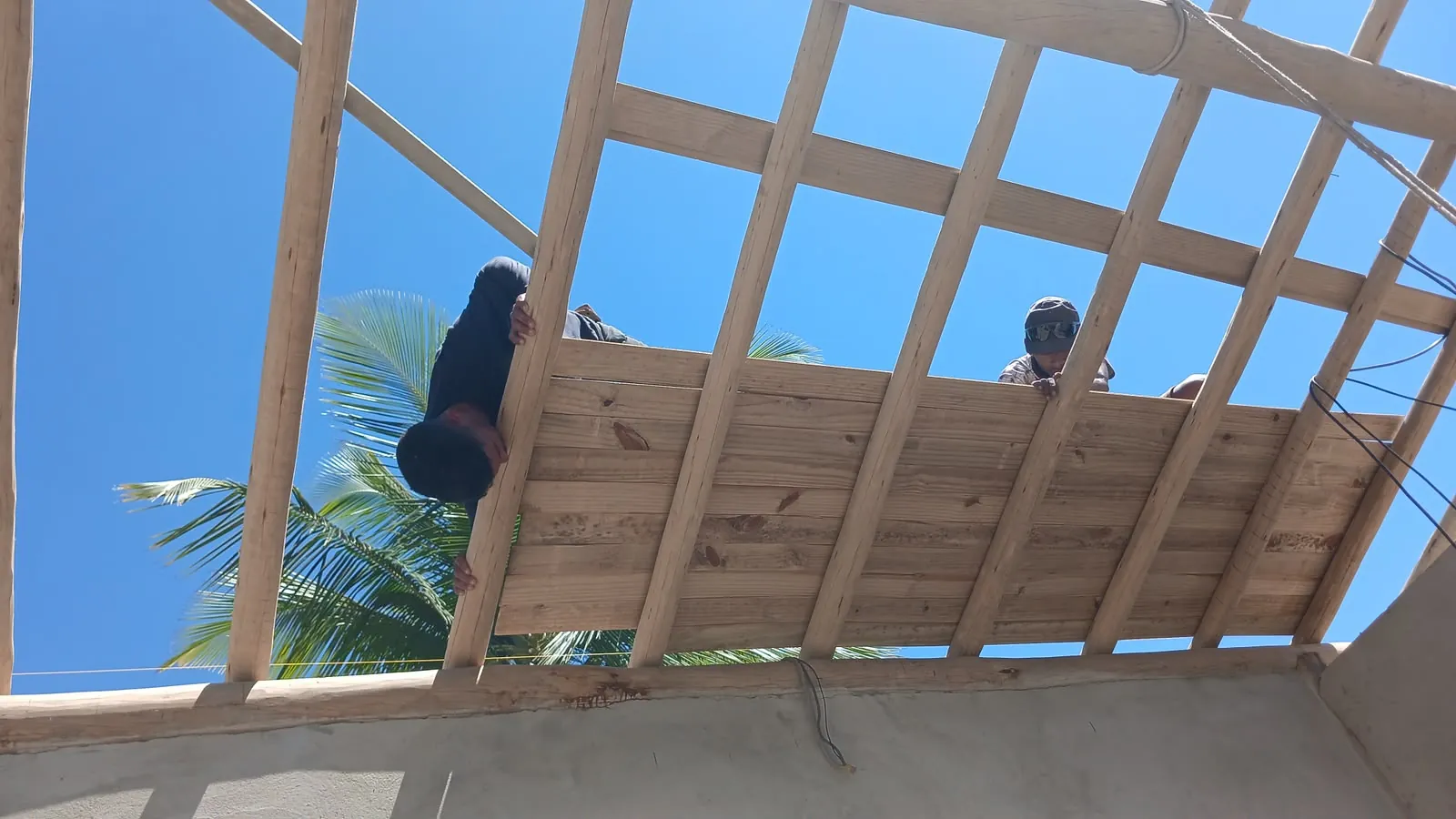
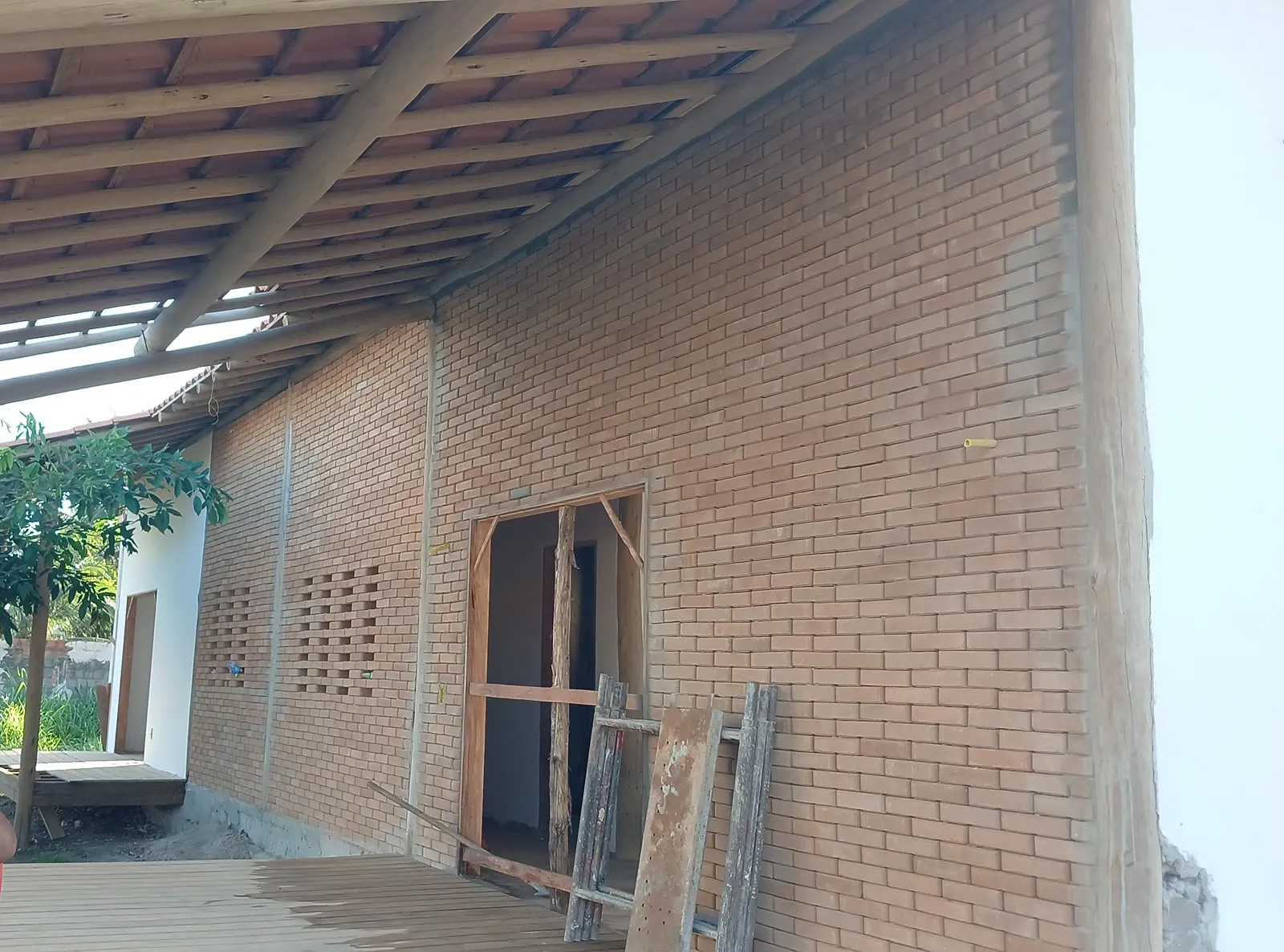
This combination matters especially in a house of earth and wood. Shortening the time materials stay wet and helping them dry out helps preserve them. And the same eave that protects the bricks and the wood creates a shaded space where you can stay outside even in the rain.
What does it mean to build for centuries?
For BioConstrutora, thinking in centuries means designing a house that can stay in use. That includes planning how to inspect the roof, renew the protection on the wood and replace a deck board when the time comes. A building's service life depends on its design, construction, exposure conditions and care over time.
It is at this scale that the BioMétodo brings bio-construction, sustainability and the building industry together. The region's soil shapes the walls. The timber has a known origin and well-defined roles. The roof protects the house and opens up space to live on the porch. These are choices that make sense in the Cocoa Coast climate and help build homes worth preserving.
Sources cited in the article
- Global Status Report for Buildings and Construction 2025–2026 — UNEP and GlobalABC
- Capillary break beneath slab — Building Science Education, U.S. Department of Energy
- Particle size and compressed earth block properties — Applied Sciences, MDPI, 2024
- Life cycle assessment in earth construction: a systematic review — Sustainability, MDPI, 2022
- Wood Handbook: wood as an engineering material — Forest Products Laboratory, USDA, 2021
- DOF+ Rastreabilidade — Ibama (in Portuguese)
- Effects of overhangs on wind-driven rain wetting of building facades — Foroushani, Toronto Metropolitan University